


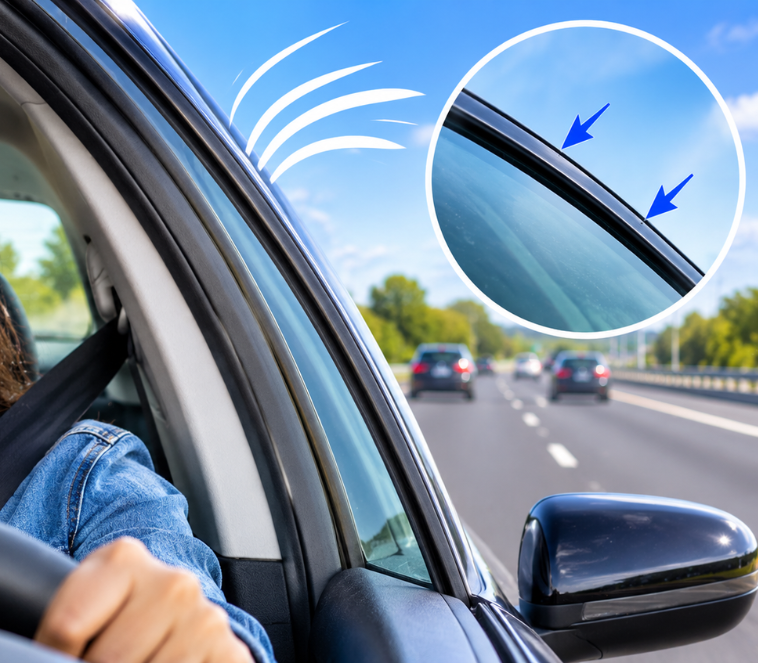
You’re cruising down the 401 and everything feels smooth. Then you hit highway speed and hear it: a thin, annoying whistle near the glass.
That windshield whistling noise is more than an annoyance. It’s your car telling you that air is getting where it shouldn’t, and ignoring it won’t make it quieter. The good news? The fix is usually simple, and you can often spot the problem yourself.
Wind noise gets louder as you speed up. Even a tiny opening can start to whistle once the air moves fast enough. That’s why you may never hear it around town, even though the gap is there all along.
We’ve repaired and replaced auto glass across the GTA since 2001, so we’ve heard this complaint a lot. In this guide, you’ll learn the most common causes, how to find the spot yourself, and when to call a pro. Just had a new windshield installed? Read on, because this one’s for you.
What Causes a Windshield Whistling Noise at Highway Speeds?
A windshield whistling noise happens when air squeezes through a small gap near the glass. The usual causes are loose or lifted molding, a weak adhesive bond, and worn rubber seals. You hear it at highway speeds because faster air pushes harder on every edge and opening around the windshield.
Most windshields have a rubber or plastic strip (called molding) around the edge. If it lifts even a little, wind can make it whistle, flutter, or buzz. Gaps in the adhesive bond can cause the same problem. One technician explains that fast-moving wind can push through gaps in the molding, the adhesive, or the seal between the glass and the body.
Damage matters too. Even a minor chip or crack can disturb the airflow over the glass.
Why a Windshield Whistling Noise Can Show Up After a Replacement
If the whistle started right after you got a new windshield, you’re not alone. Drivers often notice wind noise in the first few days after a replacement, and it usually has a fixable cause.
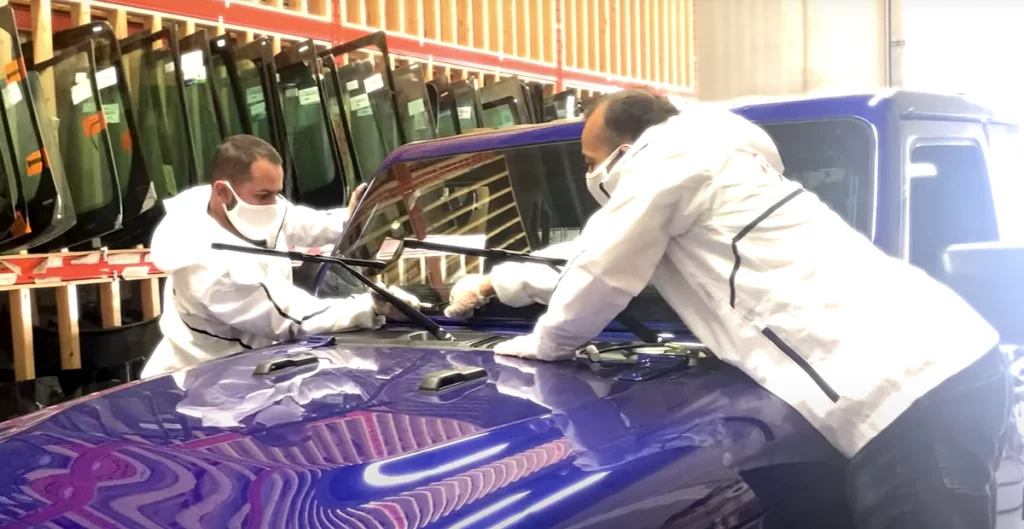
Two things are often to blame. First, the molding may not have seated flat. Second, the adhesive may not have fully set. Cold weather makes this worse, since cure time roughly doubles for every 8 to 10°C drop in temperature. That’s a big deal in a Toronto winter.
Fit matters as well. Glass made to your car’s exact shape sits flush, which is why we stock OEM and OEE glass. Curious how a replacement goes? Here’s what to expect during your appointment.
Whistling started after your install?
Our lifetime workmanship warranty has you covered. Book a same-day check anywhere in the GTA.
Is the Whistle Really Coming From Your Windshield?
Not always. Mirrors, roof racks, door seals, and loose trim can all whistle at highway speeds. Check the timing. If the sound grows with your speed instead of your engine revs, wind is the likely cause. If it changes when you press the gas, look under the hood.
Try a few more clues. Does the noise get louder on windy days or when you pass big trucks? That points to airflow around the body. Is it louder near one window? Then seals and trim move up the suspect list.
How Do You Find a Windshield Whistling Noise?
Use the tape test. While parked, press painter’s tape over the edge of the windshield molding, then take a short drive at the speed where you hear the whistle. If the noise stops, you’ve found the area. Peel the tape off in small sections to narrow it down.
Pros use this trick too. A GM service bulletin lays out the same steps: tape the trim, road test, then remove the tape piece by piece. That bulletin traced one whistle to molding vibrating against the roof panel, and the noise was strongest in hot weather.
When Should You Call a Pro?
Call right away if the noise started after a replacement, gets louder with speed, or seems to come from the glass edge. Installers recommend an inspection in those cases.
Don’t wait too long. A weak bond can let the glass shift or leak later, and your windshield helps support the roof and the passenger airbag.
lifetime warranty covers workmanship and leaks. If the noise comes from our install, we’ll make it right. We can also come to you at home, at work, or on the roadside.
The Bottom Line
A windshield whistling noise at highway speeds is annoying, but it’s rarely a mystery for long. Here’s what to remember:
- Air is slipping through a gap in the molding, seal, or adhesive.
- The noise grows with speed, so wind is the likely cause.
- The tape test helps you find the spot.
Don’t let it drag on, because small gaps rarely fix themselves.
Get Back to Quiet, Safe Driving
Call us for a same-day check anywhere in the GTA. We’ll find the leak, fix it, and leave you with no stress and no guesswork. Your ears (and your passengers) will thank you.