Book Now ✉



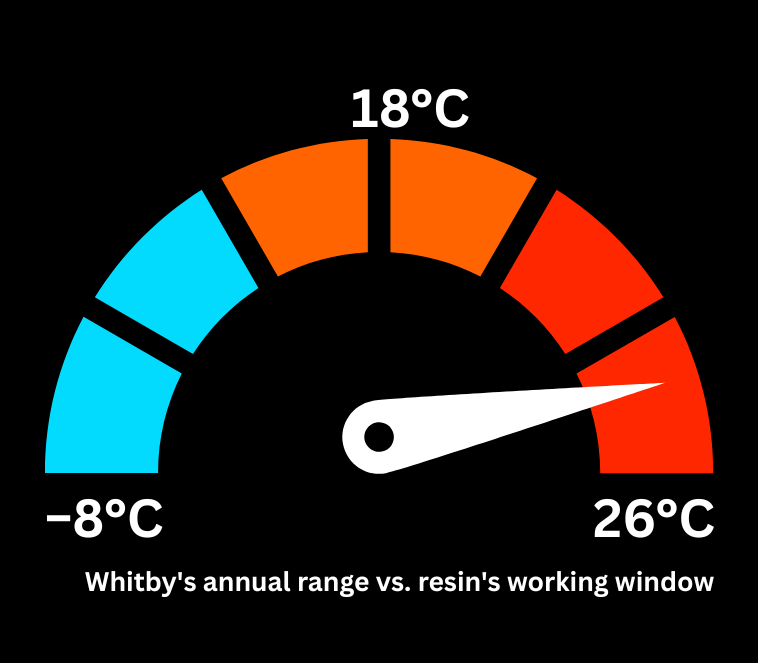
Resin doesn’t care about the calendar — it cares about the thermometer. Whitby’s swing from −8°C winters to 26°C summers changes how a chip repair cures, which is why timing and technician skill matter more than the season itself.
Yes, windshield repairs work in Whitby year-round. Resin cures best around 10–25°C, so in winter a technician warms the glass and resin first, and in summer they manage shade and cooling. The only real dealbreaker is active moisture — rain, snow, or a wet chip — which stops resin from bonding until things dry out.
Picture this: you get a chip repaired in Whitby, drive off happy, and a few weeks later the same spot has spread into a crack. It’s tempting to blame bad luck. Often, the real culprit is weather. Windshield resin is sensitive to temperature and moisture, and Whitby’s climate swings from freezing winters to hot, humid summers in a way that can make or break a repair. Knowing how weather affects the process helps you know what to expect from your Whitby windshield repair.
Weather changes how resin flows into a chip and how well it cures. Resin thins and flows faster in warm temperatures, but can also cure too fast and trap air bubbles. In cold temperatures, resin thickens and moves slower, leaving gaps if it isn’t warmed first. Moisture from rain, snow, or humidity can get trapped inside the damage and stop the resin from bonding at all. None of this makes repairs impossible outside perfect conditions — it just means the technician has to actively manage temperature and moisture instead of injecting resin and hoping for the best.
Whitby doesn’t have gentle, predictable weather. Winters regularly drop below −8°C, while summer afternoons can hit 26°C or higher with high humidity on top, a pattern confirmed by Environment Canada’s local climate data. Add in Lake Ontario’s effect, which brings sudden swings and lake-effect snow, and you’ve got a lot working against a resin that needs a fairly narrow range to cure properly. That’s not a reason to put off a repair, just a reason to make sure whoever does it accounts for that day’s conditions.
Every Whitby season asks something different of the resin, and of the technician handling it.
Below 0°C
Yes, but the resin and glass both need to be warmed to the right range first, or the resin won’t cure properly. Injected cold, resin turns thick and sluggish and may not fully penetrate the chip, leaving weak spots that let the crack spread later. As AutoZone’s repair guidance explains, resin cures best within a narrow warm-temperature window, and cold slows that process considerably. An experienced technician warms the glass, usually with the car’s own defroster, and keeps the resin warm rather than pulling it from a freezing vehicle.
Rain · humidity · snow
Moisture is one of the biggest enemies of a good repair. Water inside a chip blocks the resin from bonding, weakening the whole thing. AutoZone’s guidance is direct: repairing a crack in the rain isn’t advisable, since the surface needs to be completely dry. This is why a technician might reschedule during rain or snow, or dry the chip thoroughly first — it’s the difference between a repair that lasts and one you’re calling about again next month. Humid summer days can cause the same issue even without visible rain.
Above 25°C
It’s easy to assume summer is the best season for a repair, and in some ways it is. But intense heat brings its own risks. A windshield in direct sun on a hot Whitby afternoon gets far hotter than the surrounding air, which can make resin cure too fast and trap air bubbles before it fully fills the chip. Sudden cooling, like blasting the AC on hot glass, adds thermal stress that can turn a small chip into a spreading crack. A good technician manages shade and timing just as carefully in July as in January.
You might assume an indoor shop is always the safer bet. In practice, a well-equipped mobile technician manages weather just as effectively. Preheating the glass, warming the resin, drying out moisture, using UV lamps instead of relying purely on sunlight, and choosing shade over direct sun are all standard parts of the job. Our mobile windshield service is built around exactly this kind of weather management year-round. Weather only genuinely stops a repair in severe conditions like heavy snowfall or a downpour, and rescheduling by a day protects the work rather than compromising it.
Weather does affect windshield repair quality, but it doesn’t have to affect yours. Cold, heat, rain, and humidity all call for small adjustments, not a reason to delay a repair you need. A chip ignored through a Whitby winter is far more likely to spread than one that’s fixed properly. Get it looked at as soon as you notice damage, and let a technician who knows how to manage local conditions handle the rest.
Yes. Cold weather repairs happen regularly, but the technician needs to warm the glass and resin to the right range first. Skip that step, and the repair is more likely to fail or look cloudy.
Moisture inside a chip stops the resin from bonding properly, so repairs are typically avoided during active rain or delayed until the damage can fully dry. A technician may reschedule for exactly this reason.
DIY kits don’t give you control over glass temperature, resin temperature, or moisture the way a professional setup does. Even a small miscalculation in these conditions can leave the resin only partially cured.
Not automatically. Direct sun can overheat the glass and cause the resin to cure too fast, trapping air bubbles. Shade and timing matter just as much in summer as warming techniques do in winter.
Yes, most comprehensive auto insurance policies in Ontario cover chip repair year-round with little or no deductible. Weather affects how the repair is done, not whether it’s covered. See our insurance claims guide for details.

Copyright © 2026 AutoGlassCanada All Rights Reserved. Design & SEO By VMWebs Enterprise Ltd