Book Now ✉




Your windshield cracks more in summer because of thermal shock, not heat alone. When a scorching hot windshield meets a sudden blast of cold AC air, the glass expands and contracts unevenly, putting enormous stress on any chip or micro-crack already sitting there. That tiny chip from spring’s highway driving? Summer turns it into a long crack fast. Read on to learn exactly why this happens, what everyday habits are making it worse, and how to stop it before it costs you a full replacement.
You walk out to your car on a sweltering GTA afternoon. You get in, crank the AC all the way up, and hear a sharp, sickening crack spread across your windshield. You never hit anything. Nothing struck the glass. It just cracked on its own.
If that sounds familiar, you’re not alone. We see it every summer across the Greater Toronto Area. A windshield that cracks in summer with no obvious cause is one of the most common calls we get at Auto Glass Canada. And almost every time, the driver says the same thing: “I have no idea why it happened.”
Here’s the truth: the summer heat didn’t break your windshield. What you did in the heat did. Understanding that difference can save you hundreds of dollars and keep you driving safely all season long.
The Science
Windshields crack more in summer because of a process called thermal shock. This happens when rapid, uneven temperature changes put stress on the glass structure that it simply can’t handle. Heat alone rarely causes cracking — it’s the sudden swing from one extreme temperature to another that does the damage, especially when there’s already a small chip or imperfection in the glass.
Your windshield isn’t just a flat sheet of glass. It’s a laminated safety system made of two layers of glass bonded together by a plastic inner layer called PVB (polyvinyl butyral). Glass is a poor conductor of heat. When one part of the windshield changes temperature quickly, the rest can’t keep up. That mismatch in expansion and contraction creates powerful internal tension — and when the tension gets high enough, the glass cracks to relieve it.
Outside air temperature
Cabin temp in 20 min
Dashboard surface peak
Thermal gradient at risk
Common Cause
Blasting your air conditioning the moment you get into a hot car is one of the most common causes of summer windshield cracks. The outer glass surface stays scorching hot while the inner surface cools rapidly, creating a temperature gap the glass structure can’t handle.
Your windshield cracks more in summer because of thermal shock, not heat alone. When a scorching hot windshield meets a sudden blast of cold AC air, the glass expands and contracts unevenly, putting enormous stress on any chip or micro-crack already sitting there. That tiny chip from spring’s highway driving? Summer turns it into a long crack fast. Read on to learn exactly why this happens, what everyday habits are making it worse, and how to stop it before it costs you a full replacement.
Automotive glass specialists note that the temperature differential between the inner and outer glass layers can reach 30 to 50°C within just a few minutes during a GTA summer — a tremendous amount of stress on any piece of glass.
💡 The fix is simple. When you get into a hot car, open the windows first. Let the hot air escape for a minute or two. Then turn the AC on low and point the vents toward the floor, not the windshield. Gradually increase the cooling over five to ten minutes.
Root Cause
In almost every case, the crack starts at a chip or tiny imperfection that was already there. That chip isn’t just cosmetic — it’s a structural weak point that focuses every bit of thermal stress onto one concentrated spot. Engineers describe this as a stress concentrator: a flaw in the glass surface that amplifies internal tension many times over.
A chip that looked stable in April can spread six inches across your windshield by July.
Chip repair cost
Full replacement cost
Chip repair time
⚠️ Fix chips before summer, not after. When you get into a hot car, open the windows first. Let the hot air escape for a minute or two.Then turn the AC on low and point the vents toward the floor, not the windshield. Gradually increase the cooling over five to ten minutes.
Hidden Habits
After a long drive, your windshield is hot. Spraying it with cold water from a hose causes the outer glass surface to contract rapidly. That sudden contraction creates thermal shock that can easily overwhelm an already-chipped windshield. Always use lukewarm water, or let your car cool in the shade for 20-30 minutes before washing.
It seems smart, but it can actually make things worse. When part of your windshield is in direct sun and part is in shade, the glass heats unevenly. The sunny section expands. The shaded section doesn’t. This creates localized stress along the shadow line, which can initiate a crack right at the edge of a chip. Full shade or no shade is safer than half-and-half.
The fluid is cold. The glass is hot. Same thermal shock mechanism, especially risky near any chips in the wiper sweep area.
Extended UV radiation gradually degrades the PVB adhesive layer that bonds the glass layers together. A windshield that has seen many Ontario summers without protection is more brittle and more likely to crack under thermal stress than a newer one.
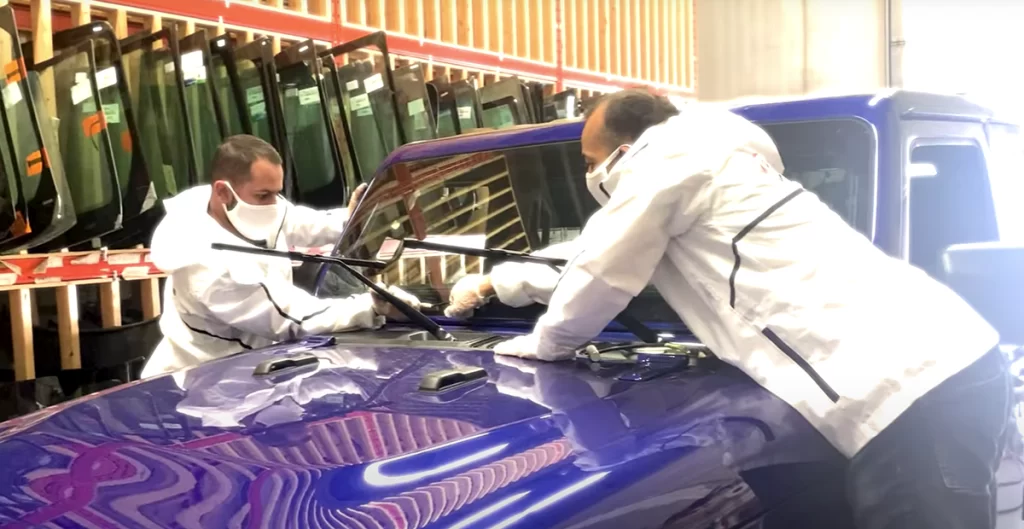
Our mobile windshield repair service comes to your home or workplace, so you don’t have to drive with a compromised windshield. We assess the damage on-site and tell you honestly whether a repair or a replacement is the right call.
Prevention
The single most effective thing you can do. A good sunshade can dramatically reduce interior temperatures so the AC blast from a cooler glass causes far less shock.
Underground parking, a garage, or a shaded structure protects against direct sun and seasonal UV degradation.
Open two or three windows first. Let trapped hot air escape for a minute. Then turn the AC on its lowest setting and point vents downward. Increase gradually over the next five to ten minutes.
If you’re washing your car on a hot day, let it sit in the shade for at least 20 minutes first.
Many comprehensive auto insurance policies cover chip repair in full with no deductible. We offer insurance direct billing — we handle the paperwork while you get on with your day.
Decision Guide
If a chip is smaller than a toonie and not in the driver’s direct line of sight, it can almost always be repaired quickly and inexpensively. Once a crack is longer than about 15 cm, runs to the windshield’s edge, or sits directly in your sightline, full replacement is typically required for safety.
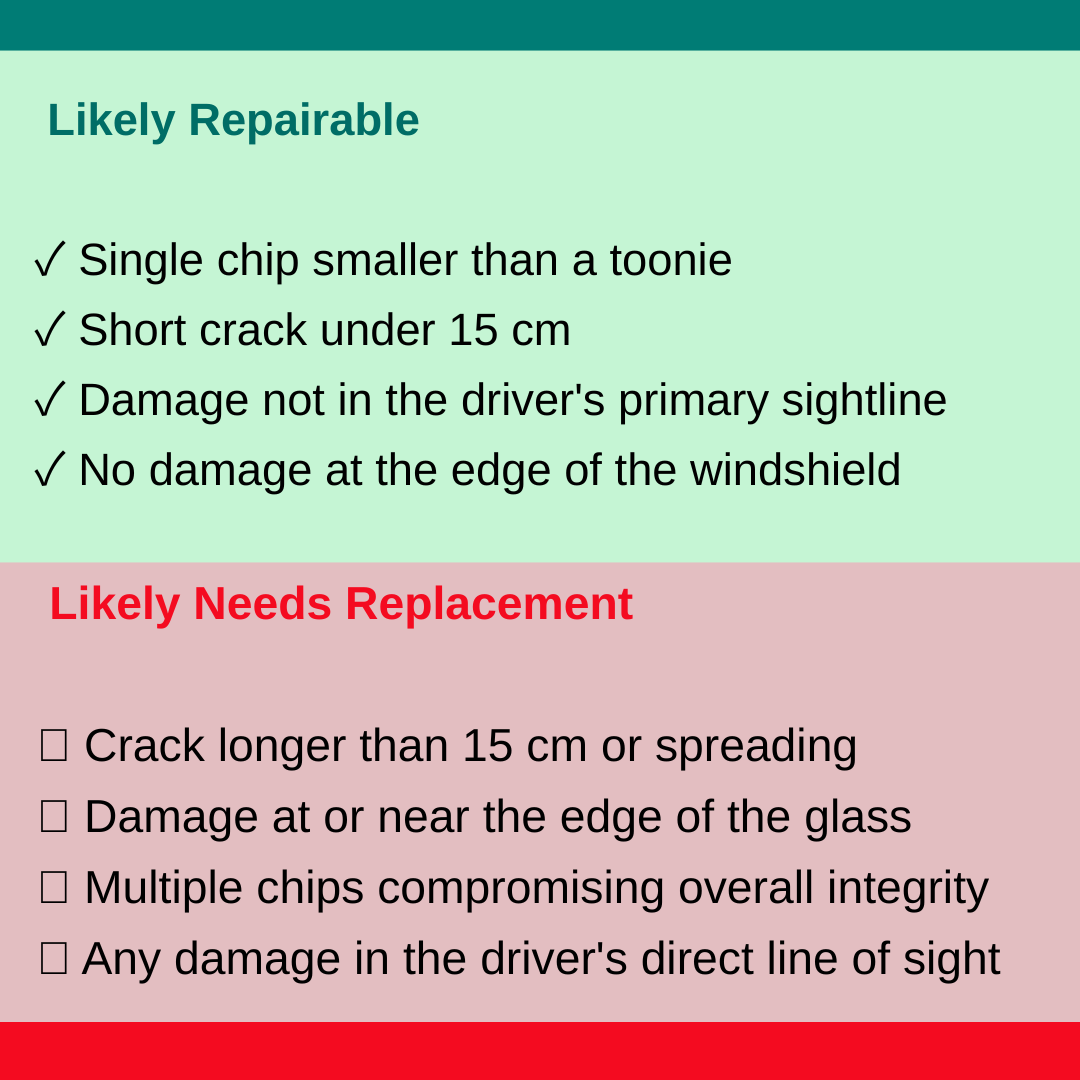
💰 Canadian windshield pricing: chips smaller than a quarter can typically be repaired for $50–$150, while full replacement ranges from $300 to $1,500+ depending on your vehicle.
Questions & Answers
Auto Glass Canada serves the Greater Toronto Area including Toronto, Vaughan, Richmond Hill, Mississauga, Brampton, Scarborough, North York, Etobicoke, and surrounding communities. 1-800-966-1869 or visit our windshield repair help center for more information.


Copyright © 2026 AutoGlassCanada All Rights Reserved. Design & SEO By VMWebs Enterprise Ltd